.svg)
Plant Health Care: How Insects and Plant Diseases Impact Long-Term Landscape Health
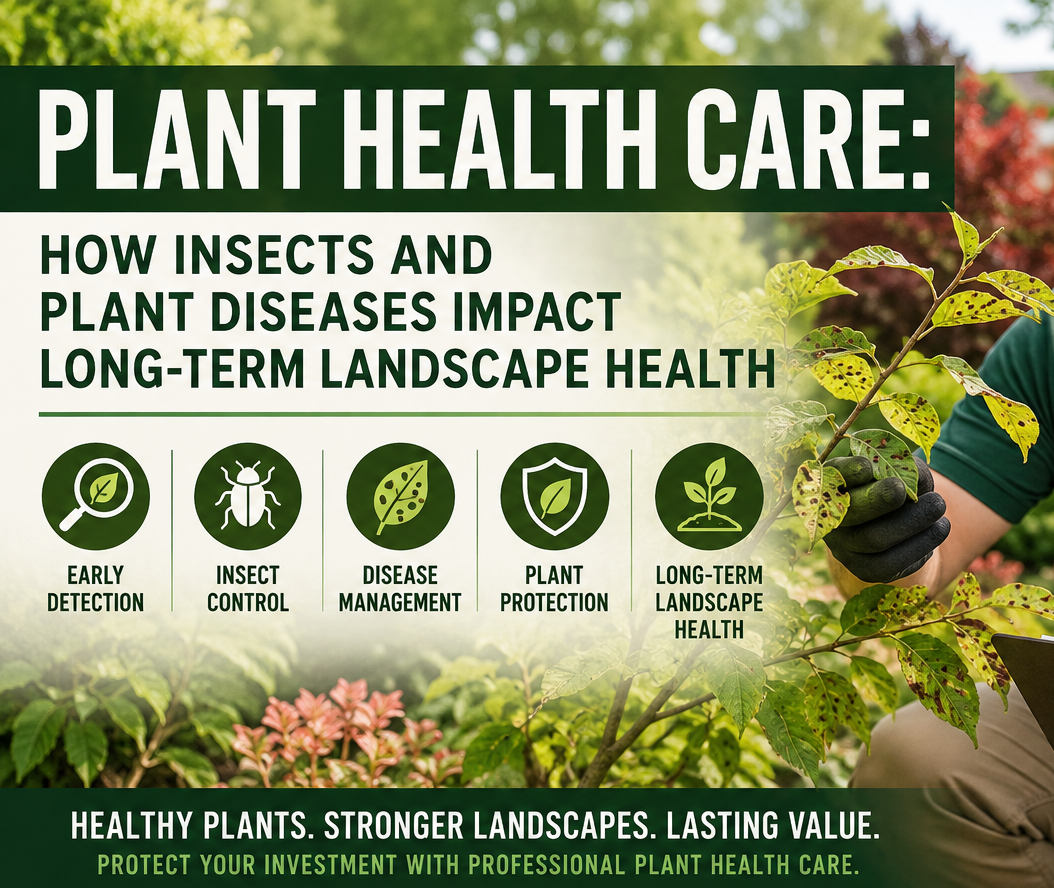
Plant Health Care: How Insects and Plant Diseases Impact Long-Term Landscape Health
A healthy landscape does more than improve curb appeal. Healthy trees, shrubs, and ornamental plants help increase property value, improve outdoor enjoyment, and create a stronger, more resilient landscape throughout the year. But many homeowners in Pennsylvania don’t realize that plant stress, insect infestations, and fungal diseases can slowly weaken landscapes long before visible damage becomes severe.
At Lang’s Lawn Care, plant health care is built around proactive inspections, Integrated Pest Management (IPM), and targeted treatments designed to protect landscapes across Chester, Montgomery, and Delaware Counties.
Why Plant Health Matters
Trees and shrubs are long-term investments. Unlike annual flowers or seasonal landscaping, mature plants take years to establish. When disease, insects, drought stress, or poor soil conditions weaken plants over time, recovery becomes more difficult and expensive.
Many common landscape issues start subtly:
- Yellowing leaves
- Premature leaf drop
- Thin canopies
- Browning branch tips
- Stunted growth
- Wilting during summer heat
- Bark damage
- Holes in leaves
- Fungus or spotting on foliage
Homeowners often assume these symptoms are simply seasonal stress, but they are frequently signs of deeper plant health problems.
Without proper diagnosis and treatment, plant diseases and insect pests can spread throughout the landscape and cause long-term decline.
Common Plant Diseases in Pennsylvania Landscapes
Pennsylvania landscapes face a wide range of fungal and bacterial plant diseases due to changing temperatures, humidity, rainfall, and seasonal stress.
Some of the most common landscape plant diseases include:
Powdery Mildew
Powdery mildew appears as a white or gray coating on leaves and stems. It commonly affects lilacs, dogwoods, phlox, and other ornamental plants during humid conditions.
While it may initially appear cosmetic, repeated infections weaken plants and reduce photosynthesis over time.
Leaf Spot Diseases
Leaf spot diseases create brown, black, or yellow spotting on foliage. Wet conditions and poor airflow often accelerate the spread of fungal pathogens.
If untreated, severe leaf spot infections can cause early defoliation and long-term stress.
Fire Blight
Fire blight is a destructive bacterial disease that commonly impacts crabapple and pear trees. Branches often appear scorched or blackened, giving the disease its name.
Lang’s Lawn Care offers fire blight suppression treatments to help protect vulnerable ornamental trees before infections spread.
Root Rot
Overwatering, poor drainage, and compacted soil can lead to root rot issues in shrubs and ornamental plants. Once roots begin deteriorating, plants struggle to absorb nutrients and moisture properly.
Early symptoms often mimic drought stress, which is why professional plant inspections are important for accurate diagnosis.
Insect Pests That Damage Trees & Shrubs
Insects are another major threat to long-term plant health. Many landscape pests feed on sap, leaves, bark, or root systems, weakening plants over time and increasing disease susceptibility.
Aphids
Aphids are small sap-feeding insects that cluster on new growth. Heavy infestations can distort leaves, reduce plant vigor, and produce sticky honeydew that encourages mold growth.
Spider Mites
Spider mites thrive during hot, dry weather and are especially damaging to evergreen trees and shrubs. These pests often go unnoticed until bronzing or discoloration appears.
Scale Insects
Scale insects attach themselves to stems and branches while feeding on plant sap. Because they resemble bumps on bark, infestations are frequently overlooked until plants begin declining.
Japanese Beetles
Japanese beetles aggressively feed on ornamental plants, roses, and trees during summer months. Repeated feeding weakens plants and reduces overall landscape quality.
Tree Borers
Wood-boring insects can be especially destructive because they attack internal vascular systems responsible for transporting water and nutrients.
Lang’s Lawn Care provides tree borer protection programs using targeted treatments and systemic applications to help protect vulnerable trees.
Stress Makes Plants More Vulnerable
One of the biggest misconceptions homeowners have is assuming insects or diseases are the original cause of plant decline.
In reality, many plant problems begin with stress.
Common plant stress factors include:
- Improper watering
- Soil compaction
- Drought
- Excess moisture
- Poor soil pH
- Construction damage
- Improper pruning
- Heat stress
- Nutrient deficiencies
When plants are stressed, their natural defense systems weaken. This makes them far more vulnerable to disease infections and insect infestations.
That’s why proper plant health care involves more than simply spraying for bugs. It requires evaluating the entire landscape environment.
The Importance of Plant Health Inspections
Professional plant health inspections help identify problems before irreversible damage occurs.
At Lang’s Lawn Care, plant health care programs begin with detailed landscape inspections that assess:
- Plant species
- Soil conditions
- Drainage issues
- Insect activity
- Disease symptoms
- Environmental stress
- Seasonal risk factors
Their team follows Integrated Pest Management (IPM) principles, focusing on targeted treatments while minimizing unnecessary environmental impact.
Early detection is critical because many diseases and insect infestations become significantly harder to control once severe damage appears.
How Preventative Plant Health Care Protects Your Landscape
Preventative plant care helps homeowners avoid expensive removals and major landscape replacements.
Benefits of proactive plant health care include:
- Stronger root development
- Improved disease resistance
- Reduced insect pressure
- Healthier flowering and foliage
- Better drought tolerance
- Longer plant lifespan
- Improved curb appeal
- Lower long-term maintenance costs
Targeted seasonal treatments can often stop issues before homeowners ever notice symptoms.
Watering Practices Also Impact Plant Health
Improper watering is one of the most common contributors to landscape decline.
Overwatering creates ideal conditions for fungal diseases and root rot, while underwatering weakens plants and increases insect susceptibility.
For most established trees and shrubs:
- Water deeply instead of frequently
- Water early in the morning
- Avoid evening watering when possible
- Focus on root zones rather than foliage
- Maintain proper mulch depth to conserve moisture
Healthy watering habits are one of the best ways to improve overall plant resilience.
When Should You Schedule a Plant Health Inspection?
The best time to inspect landscapes is before major symptoms develop.
Homeowners should consider scheduling a plant health inspection if they notice:
- Dead branches
- Thin or sparse growth
- Yellowing foliage
- Leaf spotting
- Bark splitting
- Increased insect activity
- Wilting despite watering
- Sudden decline in shrubs or ornamental trees
Early treatment often prevents larger landscape problems later in the season.
Protect Your Landscape with Professional Plant Health Care
Trees and shrubs face constant environmental stress throughout the year. Without proactive care, disease and insect pests can slowly damage even mature, established landscapes.
At Lang’s Lawn Care, plant health programs are designed to identify issues early, improve long-term plant vitality, and protect landscapes with customized treatment plans tailored to Pennsylvania growing conditions.
Whether you’re dealing with plant disease, insect pressure, declining shrubs, or stressed ornamental trees, a professional plant health inspection can help identify the underlying cause before damage becomes permanent.